History of the UN
The United Nations (UN) was established on 24 October 1945 after the Second World War to maintain international peace and security and provide countries with a lasting framework for cooperation. Its creation was a response to two world wars, which had shown that no country could resolve global conflicts and crises alone.
Although more than eighty years have passed since the UN was founded, its core objectives remain the same: preventing armed conflict, promoting international cooperation, protecting human rights and supporting sustainable development. At the same time, the scope of the UN’s work has continuously expanded to address new global challenges such as climate change, international terrorism, pandemics, cybersecurity and forced displacement.
01
From the League of Nations to the UN
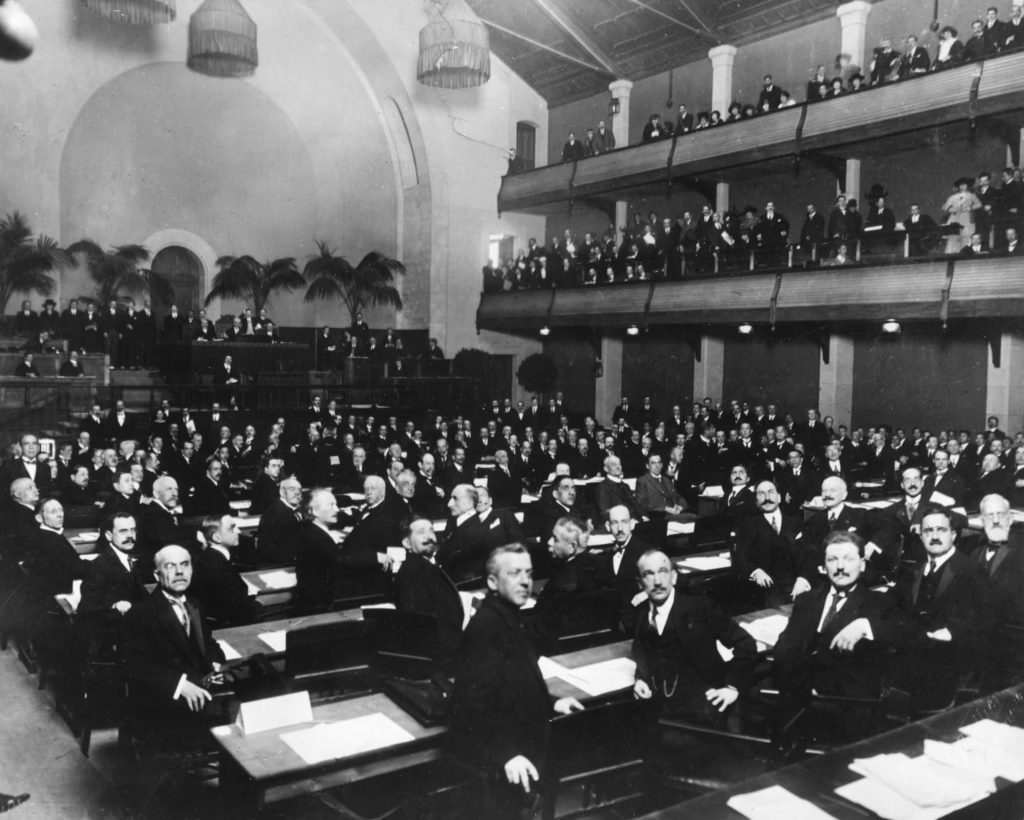
The UN was preceded by the League of Nations, established in 1920 after the First World War to preserve peace and resolve disputes between states through diplomatic means. Although the League achieved success in some areas, it failed to prevent Japanese aggression in Manchuria, Italy’s invasion of Ethiopia or the outbreak of the Second World War. Among its weaknesses were the absence of effective means to enforce its decisions and the fact that not all major powers remained consistently involved in its work.
During the Second World War, the Allied nations concluded that a new and more effective international organisation would need to be created after the war. It was to be based on broader membership, a clearer legal framework and a greater commitment to cooperation in the interests of maintaining peace.
02
The Founding of the UN
The first steps towards creating the new organisation were taken during the war. On 1 January 1942, representatives of 26 countries signed the Declaration by United Nations, affirming their commitment to continue cooperating against the Axis powers. The term “United Nations” was proposed by US President Franklin D. Roosevelt and later became the official name of the new organisation.
The Dumbarton Oaks conferences were held in Washington, where the United States, the United Kingdom, the Soviet Union and China developed the basic structure of the future organisation. In February 1945, several important principles were agreed at the Yalta Conference, including the composition of the Security Council and the veto power of its permanent members.
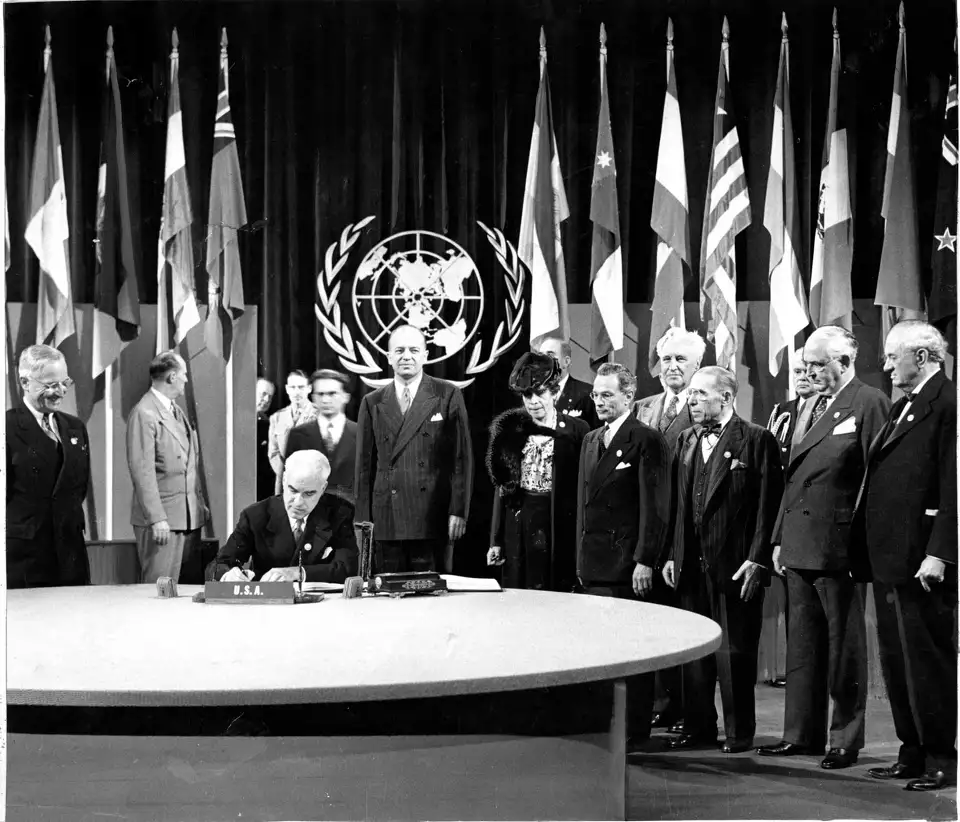
In April 1945, delegations from 50 countries gathered in San Francisco for the United Nations Conference on International Organization. After two months of negotiations, the UN Charter was signed on 26 June 1945. Following its ratification, the UN officially began operating on 24 October 1945. This date is celebrated every year as United Nations Day.
03
The Cold War Era
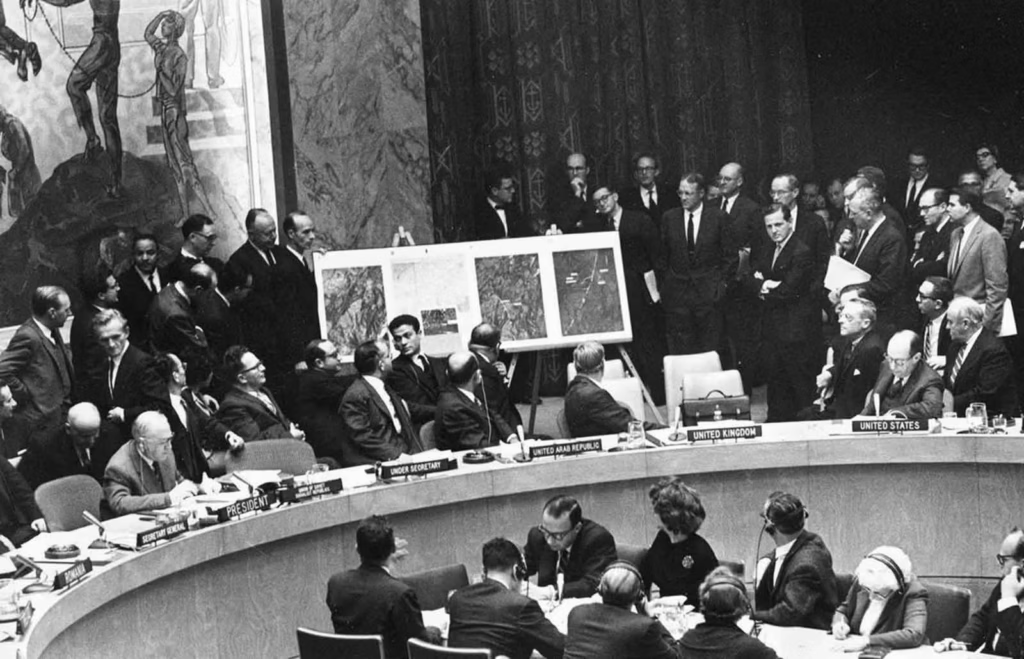
The UN’s first decades were strongly influenced by the Cold War between the United States and the Soviet Union. The confrontation between the two superpowers often made it difficult for the Security Council to take decisions, as its permanent members repeatedly exercised their veto power.
Nevertheless, the UN became an important diplomatic forum where countries could negotiate even during the most tense periods. UN peacekeeping operations also developed during this time, and the organisation played an important role in the decolonisation process, which brought dozens of newly independent countries from Africa, Asia and the Caribbean into the UN.
The Cold War era also saw the adoption of several important instruments of international law and human rights, including the 1948 Universal Declaration of Human Rights and subsequent international human rights conventions.
04
The UN after the Cold War
The end of the Cold War in 1991 transformed the international security environment and opened up new opportunities for the UN. The organisation became increasingly involved in preventing armed conflict, peacebuilding, supporting elections and rebuilding states after conflicts.
At the same time, greater attention was devoted to global issues not solely related to security. Sustainable development, climate change, public health, gender equality, humanitarian aid and international development cooperation became increasingly important areas of the UN’s work.
Member States adopted the Millennium Development Goals, and in 2015 they agreed on the 2030 Agenda for Sustainable Development, centred on 17 Sustainable Development Goals. These goals guide the work of the UN and its Member States in reducing poverty, protecting the environment, advancing education, improving health, and building peaceful and inclusive societies.
05
The UN Today
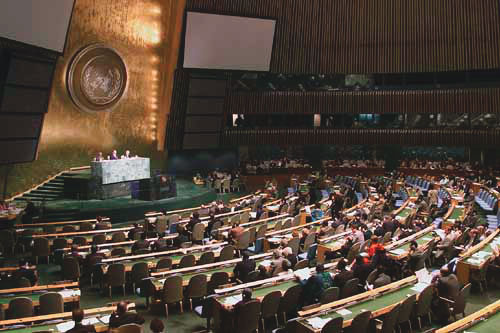
Today, the UN has 193 Member States and operates in almost every region of the world. In addition to its headquarters in New York, the UN has major offices in Geneva, Vienna and Nairobi, as well as hundreds of regional and country offices.
Alongside its principal organs, the UN system includes dozens of funds, programmes and specialised agencies working in health, education, children’s rights, refugee protection, development cooperation, food security, cultural heritage and many other fields.
Although the UN is often criticised for slow decision-making, political disagreements and limited capabilities, it remains the world’s most inclusive forum for international cooperation. Through it, international norms are developed, humanitarian aid is coordinated and solutions are sought to problems affecting the entire world.